04 / deliberate-scaleStaying small and personal
Given the growth of search companies such as Google, it is also surprising that the Mindel brothers have not turned Wordtracker into a much larger company during the nine years it has been trading.
A 4-Day Work Week Culture
“We didn't want to get too big and impersonal,” Mike says, “One of the things we enjoy is our Wordtracker culture. People thrive here. They don't feel like a cog in a machine.”
Working at Wordtracker certainly has its perks, not least a company policy that ensures none of the 15 employees needs to work longer than a four-day week. Several of them use the time to run their own consultancy businesses, the brothers admit.
“We encourage people to have their own outside interests because we often benefit from that,” Mike says, noting that it was during one of these days off recently that a senior programmer hit upon a new data mining technique that helped Wordtracker become “700 per cent” more productive at spotting search trends.
The brothers are planning a significant expansion of Wordtracker over the next few years by starting to rent data gathered on web users' behaviour by internet service providers (ISPs).
Unlike the data they have been using, which just shows what searches took place, the ISP information shows what websites people go to after doing a search.
The new opportunities created by this kind of information should enable Wordtracker to increase turnover from about £2m this year to £20m in 2011 and double its workforce to 30 people.
However, the brothers still seem reluctant to make Wordtracker too big.
“Making a mistake is not a tragedy when you are this size, making a high profit margin is,” Mike says.
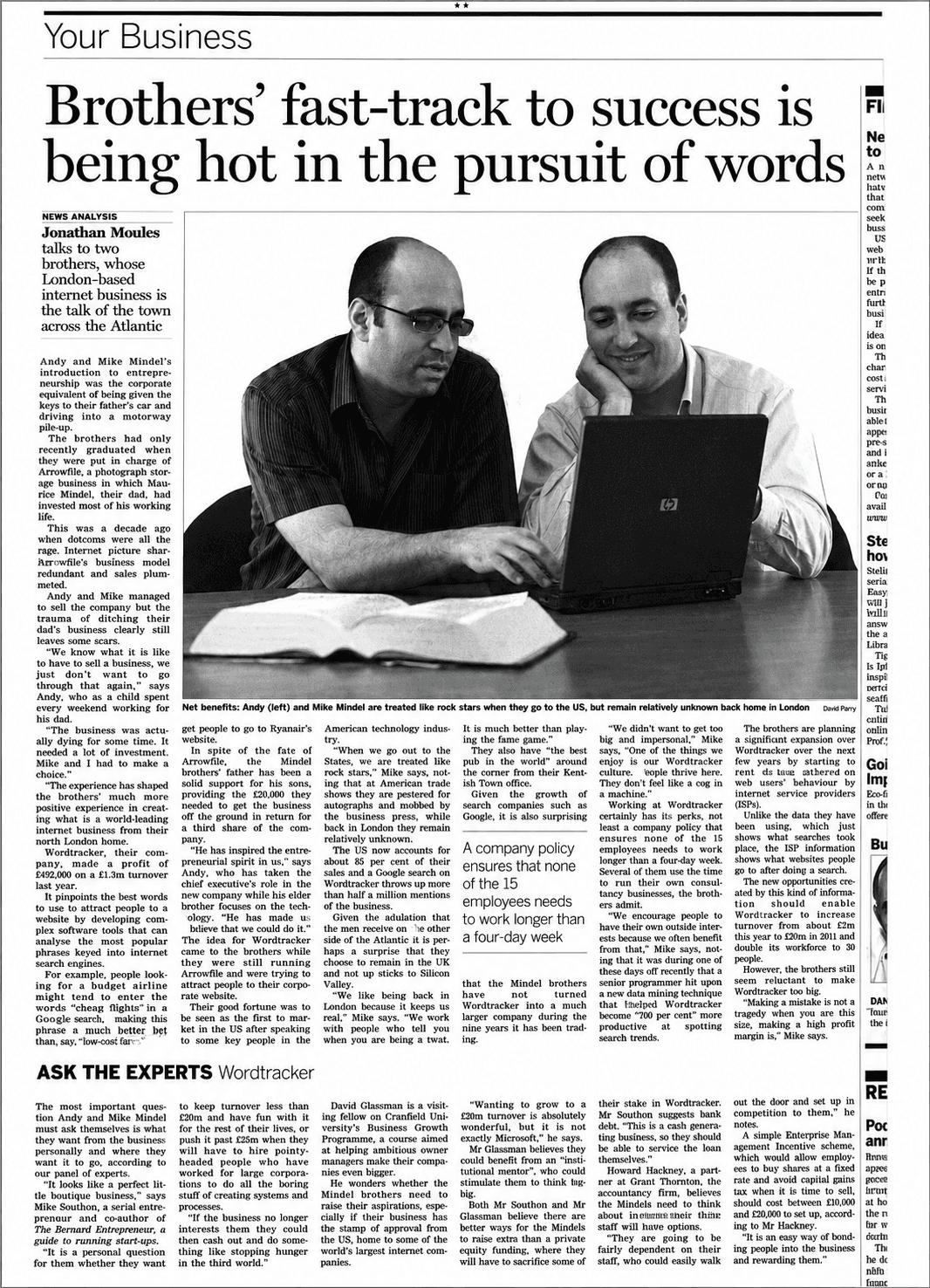
Caption: Net benefits: Andy (left) and Mike Mindel are treated like rock stars when they go to the US, but remain relatively unknown back home in London. (Photo: David Parry)