Languages
Core languages I use daily.
Founder
Combining founder-level product thinking with production AI engineering.
“I build products, not just software.”
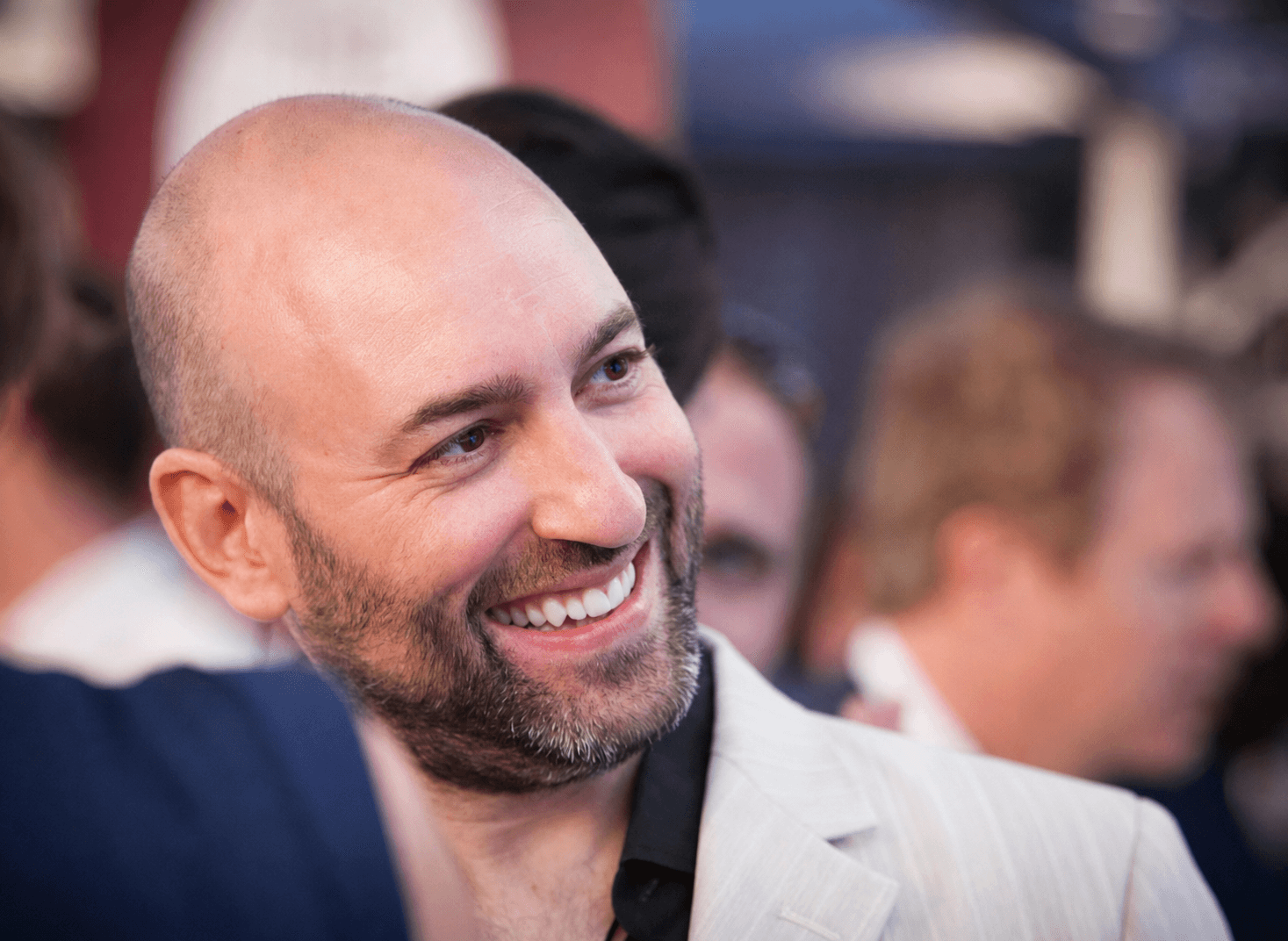 Co-founder of Wordtracker



Senior Python engineer, architect and founder-operator. I co-founded Wordtracker in 1998 and have shipped production software since 2005.
I led its technology from two developers to a team of around 25 and scaled annual turnover roughly 100× over a decade, without ever stepping away from the codebase. The last several months have gone deep into AI/LLM and agent tooling, building working systems rather than reading about them.
I balance the creative and the technical: thinking creatively, technically and critically to reach the right solution, weighing the technical environment, cost and ease of future change. Remote-native, self-directed, available now for contract work.
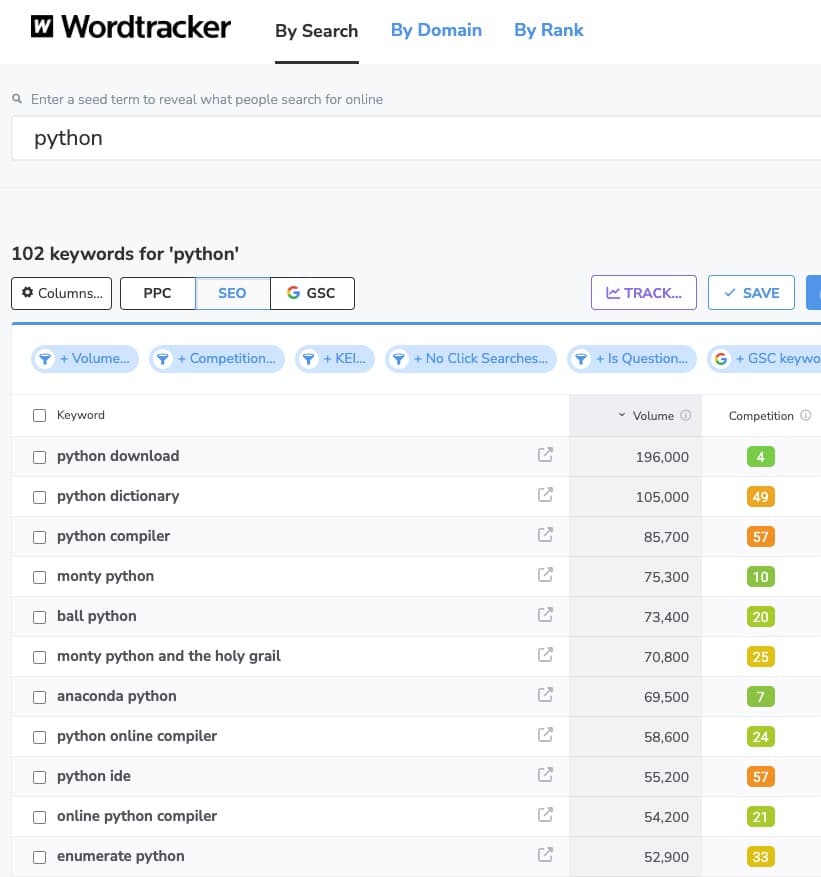
A constant for nearly two decades
Wordtracker has been that constant for me — dependable, insightful, and backed by a team that truly understands the needs of digital marketers.
Reliable since 2006
Over the years, I've relied on many tools in the industry, but few have demonstrated the same level of reliability, clarity, and long-term value as Wordtracker.
Exceptional team support
The relationship and level of support I have received from Mike Mindel and his team have been exceptional. Their professionalism, responsiveness, and genuine commitment to their users stand out in an industry where that level of service is not always guaranteed. It's clear that they care not just about the product, but about the success of the people using it.
The most relevant keywords without the complexity
Your tool is truly amazing because your engineers figured out how to get the most relevant keywords for each topic without all the unnecessary complexity that causes distraction.
Useful for marketing and academic research
I used your tool during my bachelor's and master's degrees. It's useful not only for digital marketing but also for educational research.
Over a decade — and it always delivers
I have been using your set of tools for over a decade because it always delivers. I am especially grateful for how you maintain the tool and constantly serve the most relevant keywords in a way that is ready to be implemented in my evolving research.
Keyword research made easy with Wordtracker
The additional feature of IAAT makes the keyword research easy along with PPC research.
Less expensive than Ahrefs for basic SEO
You rock and look forward to using you guys for the foreseeable future. Thanks for being less expensive than Ahrefs for my basic SEO needs.
Great tool for SEO specialists
Wordtracker is a great tool that helps with all daily SEO tasks. The best part is its free version which allows users to get started with no cost.
Best tool for beginners in Search Field
Wordtracker offers a refined user interface, and even beginners like interns can start doing extensive keyword research.
Stands the test of time
This tool has had nothing but a positive impact on our business and helps us tend to our clients everyday. Our entire SEO department uses Wordtracker daily and we find it an indispensable tool — selected because of its dependability over time and results.
Invaluable for content marketing
Wordtracker has been invaluable for my company as a content marketing research tool. It's the best keyword analysis tool because it's easy to understand, use, and find the information you're looking for — and the most well-known and trusted amongst its competitors.
Good bang for the buck
Good bang for the buck. Makes the workflow easier by being able to extract data faster, quick for my team to learn how to use, and lots of data — really, really lots of data. It gives you data which Google used to give you.
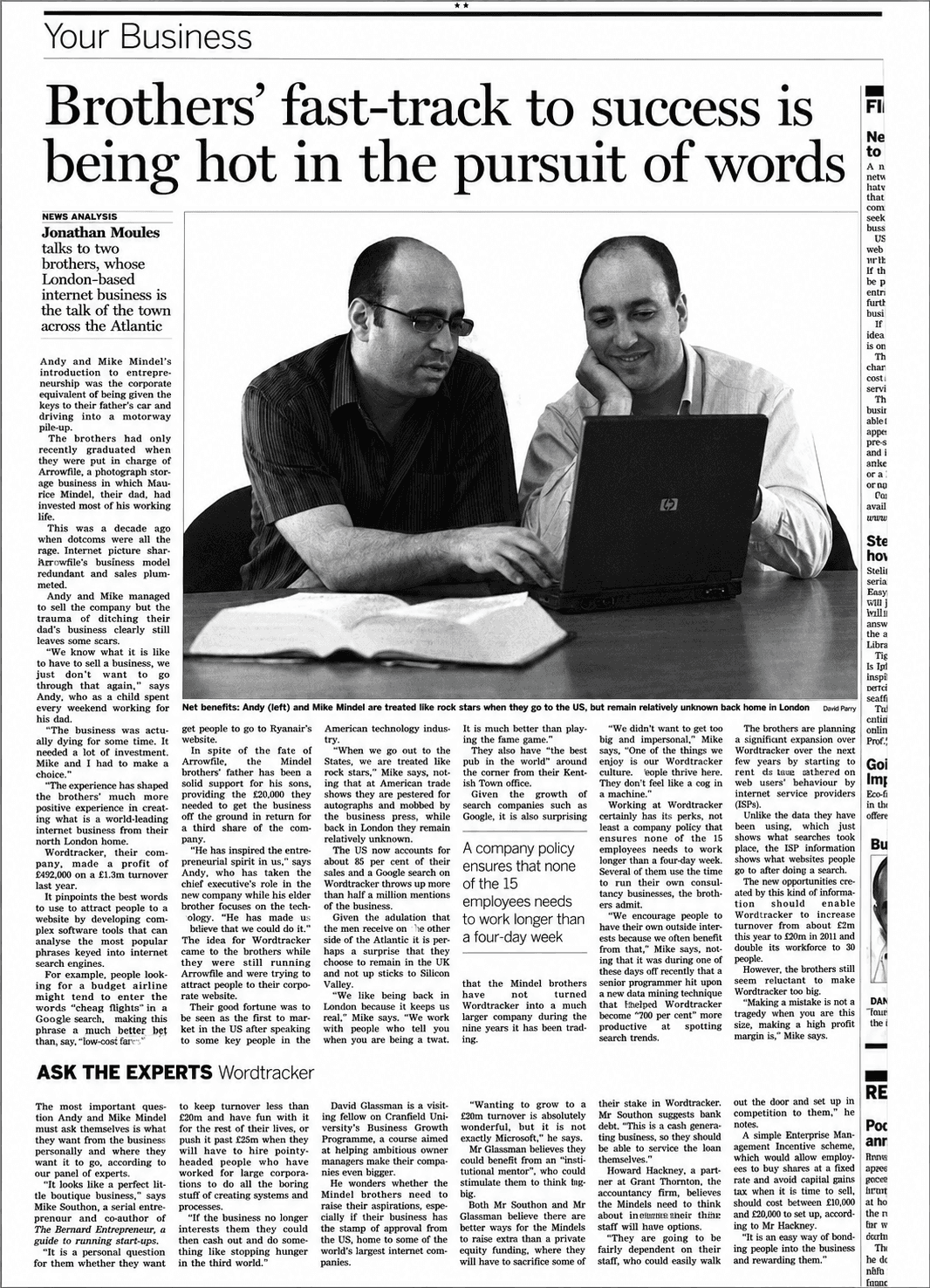
Founded and grew Wordtracker into an internationally recognised keyword research platform serving customers worldwide over 28 years.
Financial Times
"Brothers' fast-track to success is being hot in the pursuit of words..."
Read article →
Mike is a pioneering figure in search marketing — CEO and co-founder of Wordtracker, one of the internet's first commercial keyword research tools. Wordtracker put keyword research at the centre of digital marketing and helped kickstart SEO as we know it.
Pioneering keyword research — Wordtracker let SEOs find profitable niches and see exactly how often people searched for specific terms, shifting SEO from guesswork to strategy.
Education and evangelism — gave many talks at industry conferences on technical SEO, content and search algorithms.
Industry influence — through the 2000s and 2010s, collaborated with SEO pioneers such as Aaron Wall of SEO Book and Ken McCarthy of The System Seminar to shape best practices still used today.
Core languages I use daily.
Python web frameworks.
Building production AI products.
Modern React applications.
Large-scale data pipelines.
Provisioning and deployment.
Confidence before shipping.
Design for change.
Turning ambiguous ideas into products.
How I work.
Wiring agents and pipelines together.
Retrieval-augmented generation.
Senior Python engineer — for me it's the art of being a Pythonista. My technical process comes down to two habits: reduce the cost of change, and do the simplest thing that works.
It's the one line I keep coming back to:
"When faced with two or more alternatives that deliver roughly the same value, take the path that makes future change easier."
— Andrew Hunt & David Thomas, The Pragmatic Programmer
My take on Sandi Metz's 99 Bottles OO exercise puts that to work: polymorphism instead of conditionals, methods of five lines or fewer, and each class with a single reason to change. The 0, 1 and 6 cases become subclasses that override only what differs — so a new special case is a new small class, not another branch to thread through.
Sandi Metz's flocking rules drive the refactor:
Sometimes you need to make small adjustments to make things more alike.
class BottleNumber:
    @classmethod
    def from_number(cls, number):
        return {
            0: BottleNumber0(number),
            1: BottleNumber1(number),
            6: BottleNumber6(number),
        }.get(number, BottleNumber(number))

    def __init__(self, number):
        self.number = number

    def quantity(self):
        return str(self.number)

    def container(self):
        return "bottles"

    def successor(self):
        return BottleNumber.from_number(self.number - 1)

class BottleNumber0(BottleNumber):
    def quantity(self):
        return "no more"

    def successor(self):
        return BottleNumber.from_number(99)
More on GitHub:
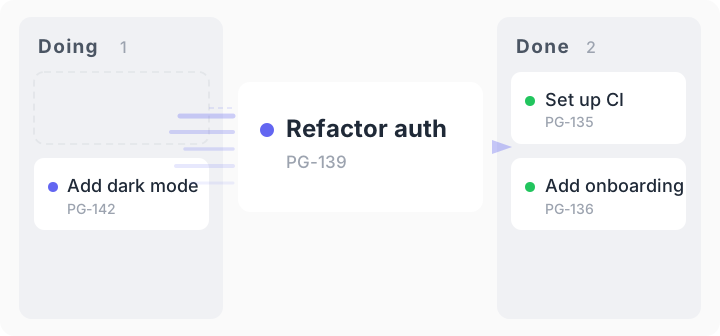
Built Stride, an agentic-engineering methodology and tooling that gives AI-assisted development guard rails (traceable, reversible, tied to a Vision) so teams ship AI-built software that lasts past day 30, instead of vibe-coding software that collapses under its own debt.
It runs on Claude Code and Linear / Kanban delivery, with atomic commits behind pull requests.
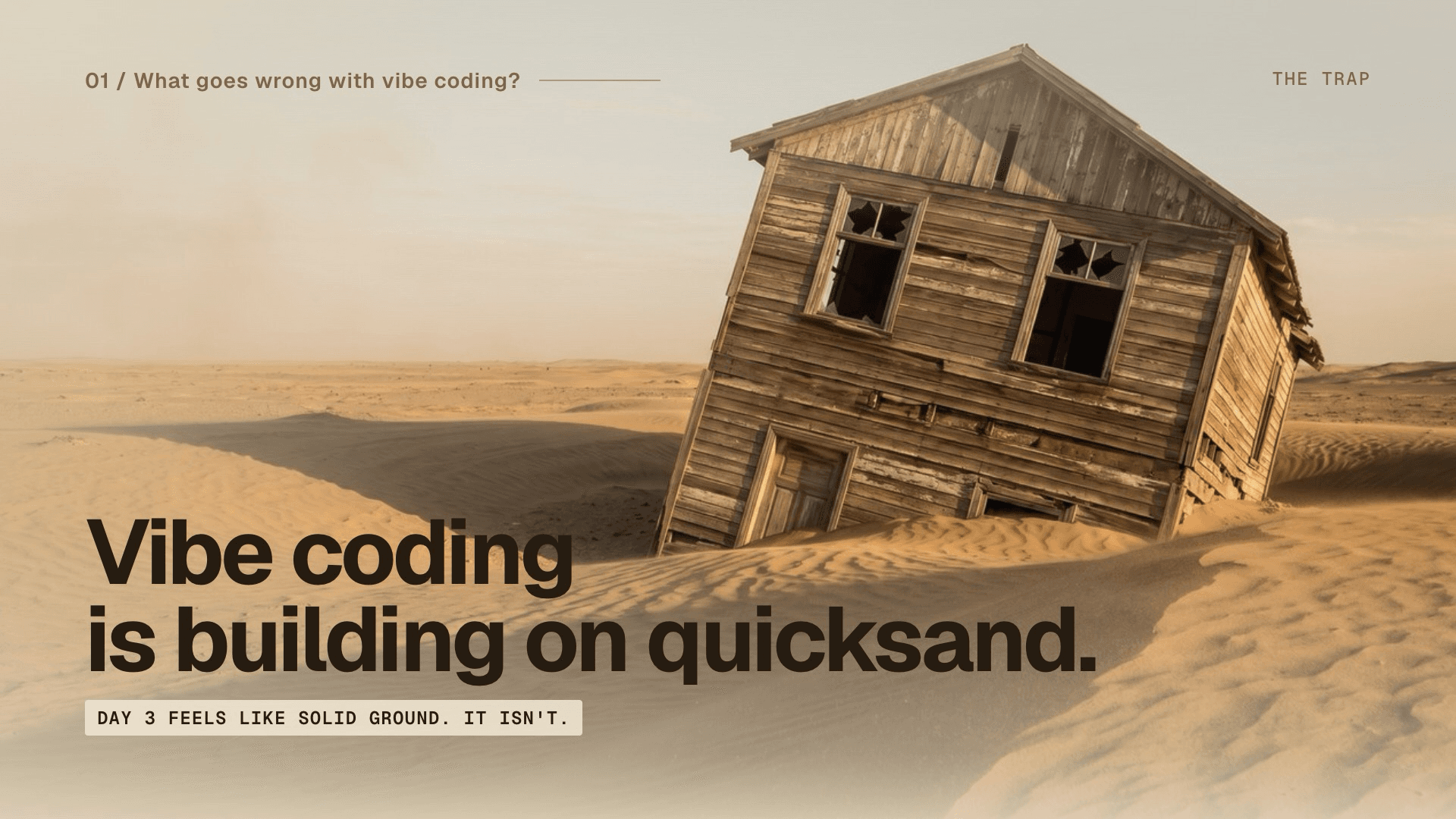
Presented it in a 25-minute talk, "Stop building on quicksand — ship AI apps that last past day 30", at the AI Global Festival (Suffolk, 2026).
The talk argued against vibe coding and for staged agentic engineering: start with a shared Vision, telegraph work across the team, give agents bounded pieces to deliver, then keep every change reviewable through the board, commits and pull requests.
The same methodology delivered the smart-glasses spike below: the method in live use on paid client work, not just theory.
For an early-stage AI startup, ran a fixed-scope two-day go/no-go spike proving a Convex reactive-database web app could drive Even Realities G2 smart glasses with real-time two-way sync.
Built a test Convex app and demonstrated a clean round trip between the phone's companion app and the glasses lens. Because the client's platform runs on the same reactive database, the result carried straight to it.
Delivered remotely and asynchronously with a shared repo and a written findings note. (Client named on request, subject to NDA.)

The keyword-research / search-intelligence tool I co-founded with my brother in 1998 and have led the technology for ever since. Financial Times–profiled; scaled ~100× over its first decade and ran profitably at national-press scale.
Co-founder & developer, 1998–2013: the technical half of a two-developer team; the CTO role grew as the team grew, to around 25 at peak.
CEO / CTO (dual-hat), Mar 2013 – Jan 2026: ran the company and owned the technology at once.

Director of the family photographic business in Mill Hill, London, selling photographic albums and storage pages.
| Year | Title | Where |
|---|---|---|
| November 2008 | Five Powerful Ways to Use Keywords | Ken McCarthy's System Seminar |
| June 2017 | Get Noticed! (The Art of Getting Attention) | Spoken-word performance |
| November 2023 | Spoken word artist | The Red Lion, Eynsham |
| December 2023 | Spoken word artist | The Art House, Southampton |
| 2026 | Stop building on quicksand — ship AI apps that last past day 30 | Talk — AI Global Festival, Suffolk |
| Years | Institution | Study |
|---|---|---|
| 1993–1996 | Reading University | BA (Hons) Film & Drama, 2:1. |
| 1991–1992 | Bristol University | Computer Science & Maths (two terms). |
| 1986–1991 | Mill Hill School | A-levels in Economics, Maths, Physics and English Literature; 12 GCSEs, including English, Physics and Computer Studies at grade A. |
Ran the Wam Bam Club for 10 years — a West End burlesque cabaret at The Café de Paris (Leicester Square) and The Bloomsbury Ballroom (Holborn); comedy, cabaret and controlled chaos, engineered to leave the room buzzing (TripAdvisor reviews).
Don't Let Him In (2011) — Horror feature film. A nerve‑bludgeoning, slow‑burning psychological horror/slasher in which a rural weekend getaway turns into a deadly double date when a charming stranger may be the serial killer known as “The Tree Surgeon.” Released internationally (incl. US Jan 2012; UK Oct 2012) and sold in major retail (incl. Walmart).
A filmmaker too — Burning Man | Release! (2015).
Across these projects I've worked as a film editor — now specialising in AI, with tools like Seedance 2.5 and Kling — as well as camera operator, director of photography and producer.
Wow. Watching your film now. The music and imagery is SUBLIME brother. Wow. Mediated ecstasy. Love it.
— Jason Silva, Shots Of Awe
Also created and ran comedy bootcamps in partnership with award-winning comedian Joe Bor.
1 Line Wonders (Comedy Challenge)
A one-session taster: complete beginners learn to write original one-liners, workshop them in small groups, then perform live on stage.
5 Minute Wonders
A multi-week programme taking novices from zero material to a confident five-minute stand-up set, building material and stagecraft week by week, ending in a live showcase.
I think 5 Minute Wonders was productive, welcoming, collaborative and inspiring! I bet that doesn’t happen too much on the comedy circuit!!
— Judy Goldberg
It's the same teach-through-practice pattern that runs through Stride, in a different medium — the creative track behind the balance of creative and technical I bring to every problem.

My advantage isn't just coding or strategy—it's connecting the two.
I work across the entire product lifecycle, from understanding the market and positioning an idea through to building, launching and growing the product.
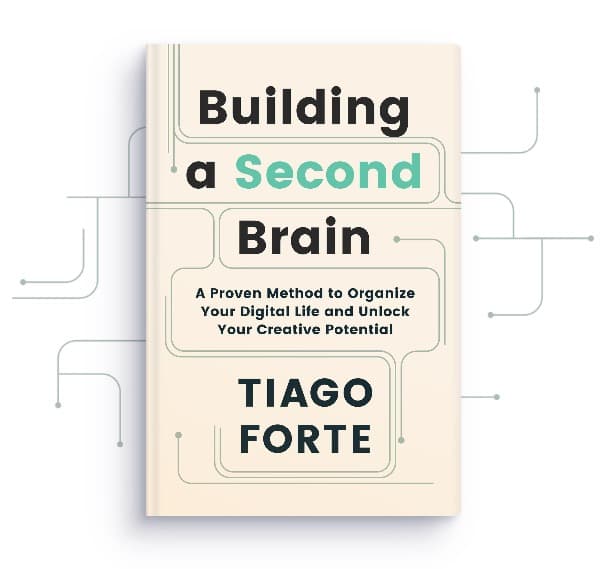
I run a second brain. It's the Tiago Forte idea: capture what you learn, get it back when you need it, and action it now. I can pull a detail from a conversation months old and use it today.
Wherever I'm working, that's the edge. Work gets done better and faster, with the best knowledge to hand. And I don't keep it to myself. I coach people to set up their own, so this AI-powered way of working spreads through the company and lifts everyone it touches.
I run it on Cmux and Obsidian. Cmux holds several second brains at once. Obsidian's where I read them. So I've got multiple knowledge bases, all talking to each other.
So the right knowledge lands just in time, for the exact job in front of me.
I'm AI-native too. I'll run several Claude, Codex and Gemini CLI jobs at once, not one at a time.
For the hard calls I lean on more than one model. OpenRouter's Fusion fires a prompt at a panel of models in parallel, with web search. A judge weighs the answers, and my model writes a better one off the back of it.
I do the same with documents. Fan one out to several frontier models and pull back a synthesised critique, a build on Karpathy's llm-council.
Three spaces I'm involved in and would like to explore further.
| Industry | Focus |
|---|---|
| Trading | Commodities, options, crypto. Markets run on data, and I like building the tools that read it. |
| Marketing | Landing pages, advertising, media buying. I built my own MDX system, lander, to keep content and design apart, so a page stays quick to change. |
| Search, AEO and GEO | The same ground I've worked for 28 years, now shifting to AI answers. I know how people find things, and how that's changing. |
| Work | The work |
|---|---|
| Data analysis | Crunch and analyse large volumes of data to detect patterns (Redshift, BigQuery). |
| Trading | Writing trading systems. |
| APIs | Writing APIs (FastAPI / Pydantic) which serve valuable data. |
| Creative problems | Solving interesting creative problems, like the two-way sync between Convex and the Even Realities glasses. |
| Term | Detail |
|---|---|
| Availability | Immediately, remote — UK-based. |
| Engagement | Contract or employment, equally welcome. Ideal is part-time — 2 days a week, 3 at most — with room to scale up for the right project. |
| How I work | Remote-native and self-directed. Happy to lead a team of coders and agents, or embed in yours. |
| Experience | 25+ years shipping production software; Wordtracker co-founder. |
| Invoicing | Through Webventurer Ltd. |
I'm also available for part-time or full-time employment, as well as contract work.
| Term | Detail |
|---|---|
| Availability | Immediately. |
| Type | Part-time or full-time. |
| Location | Remote, hybrid or on-site — UK-based. |
Available now for contract work through Webventurer Ltd, or for part-time or full-time employment.